
What Sets PlayDash Verification Off
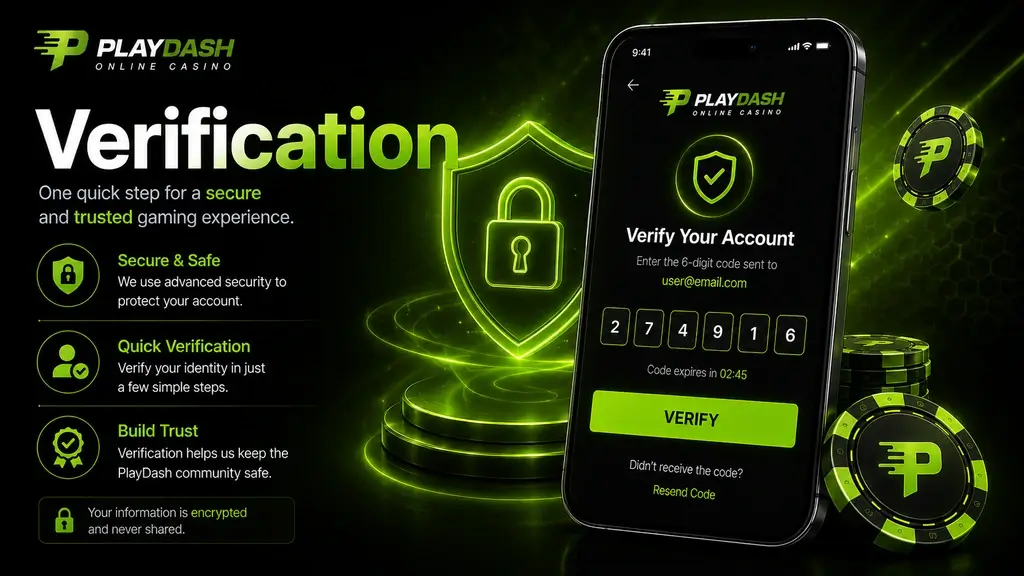
The clearest publicly documented trigger is a withdrawal. PlayDash-focused Malaysia sources state that KYC must be completed before the first withdrawal is approved, while PlayDash’s own public responses to Malaysian players describe identity checks as a security requirement when a withdrawal is placed on hold.
KYC also forms part of the operator’s wider anti-money-laundering and fraud controls. PlayDash privacy material lists identity verification, transaction monitoring and fraud prevention among the purposes for which personal and financial information can be processed.
First Withdrawal and Additional Security Checks
For most players, the practical point to prepare for is the first cash-out rather than registration.
Verification may become relevant when:
- you request your first withdrawal;
- the operator needs to confirm that the account holder matches the submitted identity;
- payment and account details require additional checking;
- transaction activity triggers security, fraud or AML review.
Public PlayDash material does not establish a universal lifetime-deposit threshold that automatically starts verification, so no fixed deposit figure should be treated as a standard rule for Malaysian accounts.
Preparing documents before requesting a withdrawal can still be useful because the operator may place the transaction on hold until the required checks are completed.
The Documents to Have Ready
Available PlayDash sources consistently point to identity and address verification. Public operator responses have also confirmed requests for a Malaysian IC together with a selfie, while PlayDash-focused Malaysia material lists government-issued ID and recent proof of address among the standard documents.
| Document | What it confirms | Practical requirement |
| Government-issued photo ID | Identity and age | Valid, readable and belonging to the account holder |
| Selfie with the same ID | Connection between the person and document | Face and document clearly visible |
| Proof of address | Residential details | Recent document showing matching name and address |
A Valid Government Photo ID
For a Malaysian account, the operator may request a Malaysian IC or another accepted government-issued identity document. PlayDash privacy information specifically lists Malaysian IC/passport data as part of KYC processing.
The image should show the complete document clearly enough for its details to be read. Common practical problems include:
- part of the document being cropped out;
- glare covering the name, photograph or number;
- an expired or otherwise invalid document;
- submitting a document belonging to another person;
- account details that do not match the ID.
The account should also belong to an adult. PlayDash’s public privacy information associates date-of-birth verification with its 18+ requirement.
A Selfie Taken With the Same ID
PlayDash has publicly confirmed asking Malaysian users for an IC and a selfie holding that same document during withdrawal verification. In responses to customer reports, the operator described this as an identity-security measure intended to confirm who is requesting access to the funds.
For a usable selfie:
- use the same identity document submitted for KYC;
- keep your face clearly visible;
- make sure important details on the document are not hidden by glare;
- avoid filters, editing or heavy image processing;
- take a new image if the first one is blurred.
A selfie with a different document or an image in which the ID cannot be read may create another verification step instead of completing the check.
Recent Proof of Your Address
PlayDash-focused Malaysian information lists a utility bill or bank statement as examples of proof of address and states that the document should be dated within the previous three months.
This document is intended to connect the player with the residential details used for the account.
A suitable proof of address should normally show:
- the account holder’s name;
- the residential address;
- the document issuer;
- a recent issue or statement date.
The three-month freshness rule is worth checking before uploading. An otherwise valid bank statement or utility bill may no longer be useful if it is too old.
What Gets a Document Rejected or Delayed
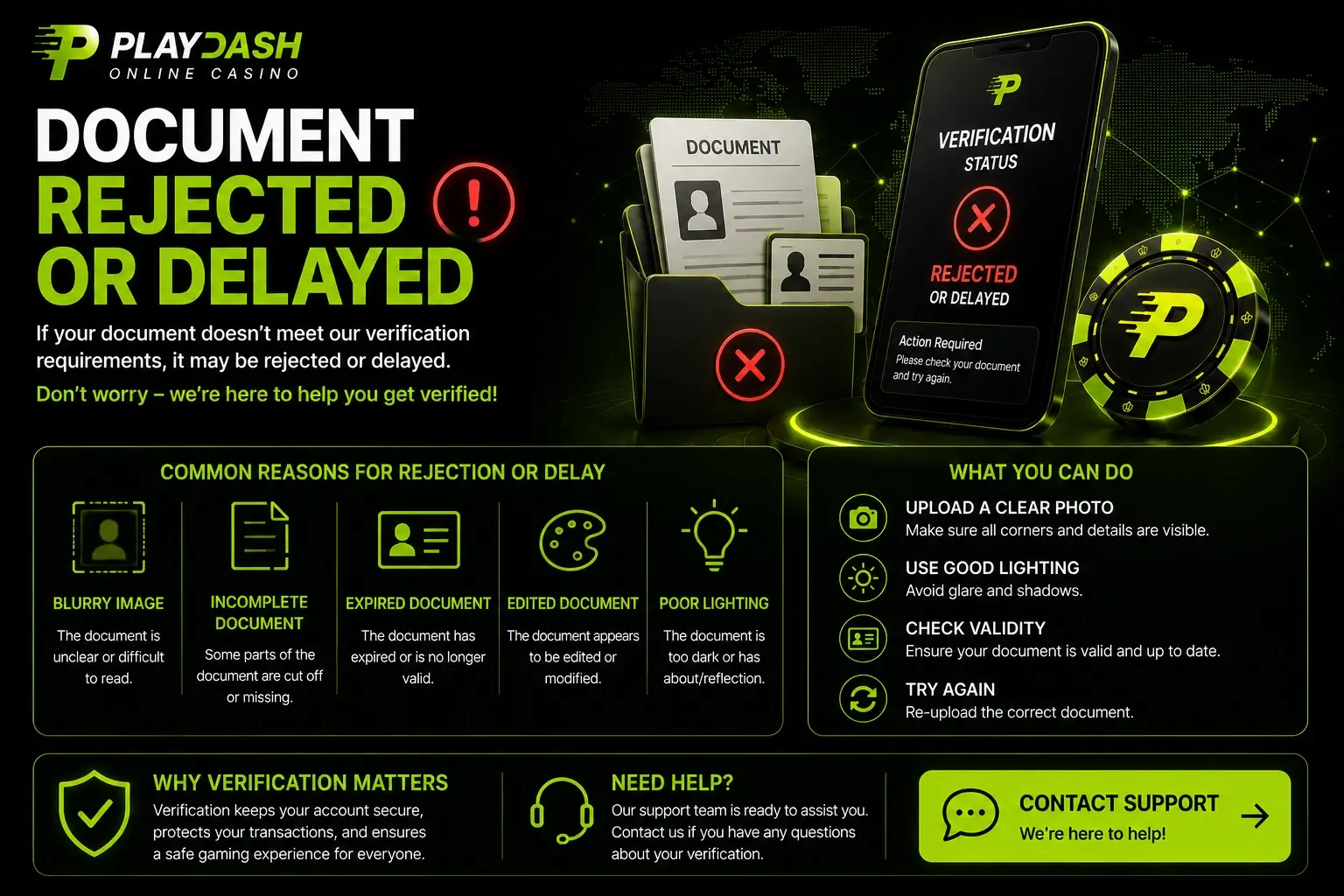
Many KYC problems are not about the type of document but about whether the information can be checked reliably.
| Problem | Why it causes difficulty | Better approach |
| Blurred image | Details cannot be verified | Retake it in good lighting |
| Cropped document | Important information is missing | Photograph the complete document |
| Expired ID | Identity evidence may no longer be valid | Use a current document |
| Edited image | Authenticity becomes harder to establish | Upload an untouched image |
| Different names | Account and document data conflict | Use consistent personal details |
| Old address evidence | Residence information may be outdated | Submit a recent statement or bill |
Blurry, Expired, Edited, or Mismatched Details
Consistency matters across the account, identity documents and payments. PlayDash terms material states that payment methods should be registered in the player’s own name, while its privacy information links account details, payment data and verification documents to security and compliance checks.
Before uploading, check that:
- your name is written consistently across the account and documents;
- the ID is current and fully visible;
- the address evidence is recent;
- photographs are sharp enough to read;
- images have not been digitally altered;
- the documents genuinely belong to the account holder.
Sending the same unusable photograph several times is unlikely to solve the underlying issue. Correct the specific problem first.
How Deep the Check Can Go
Not every verification necessarily requires the same amount of information. PlayDash’s privacy policy says KYC and AML processing may cover identity documents, selfies, bank statements, payment information, IP data and transaction history. It also describes fraud detection and regulatory compliance as reasons for processing this information.
This means an ordinary identity check can become more detailed when the operator needs additional evidence to resolve a mismatch or assess financial activity.
Standard Checks and Additional Review
PlayDash does not publish a sufficiently clear public Malaysia-facing framework identifying its checks as SDD, CDD and EDD, so those labels should not be treated as confirmed account stages.
In practice, the distinction is simpler:
| Type of review | What may be checked |
| Basic identity verification | ID, age and account ownership |
| Address verification | Recent proof of residence |
| Payment verification | Whether payment details belong to the account holder |
| Additional compliance review | Further information required to resolve security or AML concerns |
The amount of information requested can therefore depend on the particular account rather than on one fixed checklist for every Malaysian player.
After You Upload
Verification does not always end with the first upload. A document can be accepted, rejected because it cannot be checked, or followed by a request for clearer or additional information.
PlayDash-related withdrawal terms state that a withdrawal can remain under security and compliance review, while current public operator responses show withdrawals being temporarily held until identity verification is completed.
Approved, Returned, or Checked Again
If the submitted information satisfies the required checks, the verification barrier to the withdrawal can be cleared. If something is wrong, the useful response is to correct that specific issue.
For example:
- replace a blurred ID with a clear full-frame image;
- use a newer proof of address if the original is outdated;
- correct inconsistent account details where the operator permits it;
- provide the requested selfie rather than resending only the ID;
- contact official PlayDash support if the requested document or verification instruction is unclear.
Processing time can vary with the account and the additional checks required. It is therefore better not to treat any unofficial fixed KYC completion time as guaranteed.
Preparing Before the First Withdrawal
The simplest approach is to make sure the identity information used for PlayDash is accurate from the beginning. The operator may allow play before full document verification, but the first withdrawal introduces the point at which unresolved identity issues can directly delay access to the requested funds.
Before requesting that first withdrawal, have a valid identity document, a clear selfie if requested and recent proof of address available. Keep the same legal name across the account and payment method, and never submit edited or borrowed documents.
Verification is a security and compliance procedure, not a way to improve gambling results. PlayDash is intended for adults aged 18+, and gambling should remain entertainment funded only with money you can afford to lose.